United States Navy
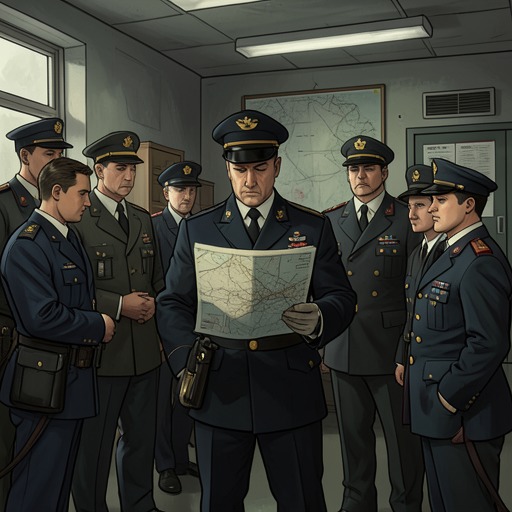
The Caine MutinyThe United States Navy in the novel is at once a machinery of immense wartime coordination and a closed institution in which hierarchy, paperwork, and command decisions govern daily life. Its reach carries inexperienced officers into Pacific operations, but its procedures can also make routine compliance seem more visible than readiness for danger. Through the service aboard USS Caine and the dispute over Captain Queeg’s removal, the novel tests how far obedience can be trusted when a commanding officer’s judgment is in question.
Wartime Institution and Entry into Service
The novel places the Navy within the widening World War II mobilization, while making clear that its particulars are fictionalized. Its prefatory statement says that the people and events aboard USS Caine are imaginary, that no ship of that name existed, and that operational details have been altered. It also distinguishes the invented case from the historical record as the novel presents it: in the preceding thirty years, it says, no court-martial had followed the relief of a captain at sea under Articles 184, 185, and 186 of the Navy Regulations. The Navy is therefore both the setting of a fictional crisis and the institution whose rules give that crisis its stakes.
The service draws in people whose former occupations have little to do with professional seamanship. During the great fleet movement toward Kwajalein, the novel describes officers of the deck as college students and former salesmen, teachers, lawyers, clerks, writers, engineers, farmers, and musicians. They help maintain a formation whose scale and precision exceed the experience of many individuals within it. Willie Keith’s own entry into the Navy begins under the pressure of a training system that could send the lower-performing students to the United States Army. Furnald Hall initially serves him as a refuge from that outcome; later, he recognizes that his wish to become a Navy man is genuine and asks for transportation to USS Caine. His transition from reluctant entrant to committed officer parallels the institution’s transformation of civilians into people charged with consequential duties.
Fleet Operations and Uncelebrated Work
The Navy’s wartime power appears most dramatically in the January fleet movement from Hawaii toward Kwajalein. USS Caine occupies the formation’s right flank in the inner antisubmarine screen. Two destroyer belts protect the transports, carriers, cruisers, battleships, and landing craft; overlapping sonar searches and radar-supported station keeping turn a mass of ships into a coordinated defensive arrangement. The minesweeper’s position is an additional safety measure, not the most glamorous role in the fleet, but its placement contributes to the protection of the larger operation.
That distinction between strategic scale and low-profile work runs through the ship’s service. USS Caine performs escorting, target towing, communications, and other fleet duties, while its communicators must process a flood of messages. Tom Keefer complains that the ship carries 112 registered publications but regularly uses only about six, and that successive monthly corrections consume time even though only a few messages concern the ship directly. A visit to a destroyer tender’s communication office later saves Willie days of decoding: the tender can decode and mimeograph fleet messages for ships whose communications staff would otherwise be burdened by them. The episode makes logistics visible as labor, not background. Fleet coordination depends on the continual handling of information as well as on ships and weapons.
The work is often monotonous and, aboard USS Caine, materially difficult. Willie’s duties move between watchstanding, coding, correcting publications, and reports; the ship’s cramped clipping shack is hot, and sleep comes in short, interrupted stretches. During the rough weather of the typhoon crisis, watches, paperwork, cold, and exhaustion narrow the crew’s days into a punishing routine. Later, the ship’s total war record is described as several hundred thousand miles of mostly dull escorting and six mines swept. Seventeen days before the war ends, it finally sweeps a mine. The contrast is deliberate: the ship’s service is not measured only by spectacular combat, but by its place in the sustained work that keeps a fleet operating.
Command, Rules, and Everyday Practice
The Navy’s hierarchy concentrates authority in the commanding officer, but USS Caine shows how a captain’s rules meet the habits of a crew. Queeg declares that there are four ways to do something aboard ship and insists on his own way. His demand turns personal preference into a standard of shipboard conduct. In one instance, after a cigarette butt is found in a forecastle scupper, he cancels all liberty. The crew keeps the main deck clean for a few days, then returns to its earlier habits once the ship sails, except for a small patch near the captain’s cabin and the wardroom entrance.
That patch becomes an image of the gap between formal authority and actual practice. The crew learns the boundaries of Queeg’s attention, complying within what the novel calls the Circle of Compliance while much of the ship remains unchanged beyond it. New rules are observed where they are likely to be noticed and ignored elsewhere; unexpected inspections can prompt fresh edicts, but not lasting transformation. The arrangement is not described as a conscious conspiracy. It is an informal accommodation that allows the ship to appear compliant without resolving the underlying conflict between Queeg’s order and the crew’s established routines.
The novel sets this pattern against the Navy’s insistence on exact accountability. After a ship-handling mistake, Queeg rebukes Burt Gorton for assuming and says that the written report to ComServPac is necessary because of that assumption. Another officer cautions Willie that the margin for error is narrow because every act can involve life, property, and danger. Yet officers also confront the mismatch between administrative demands and operational purpose. Ensign Harding, a trained accountant, undertakes a service audit of the ship’s small stores because he is assigned to it, but questions why the Navy should require such work without also providing a ship that can operate and a captain prepared to fight. The institution’s paperwork is necessary to administration, but its abundance can obscure the practical test by which sailors judge the service: whether the ship is ready for its task.
Discipline and the Crisis of Command
The Navy’s disciplinary authority governs enlisted sailors as well as officers. Willie is told that wartime strain makes discipline more, not less, important, since easing pressure may endanger the organization. John Stilwell’s court-martial illustrates the power of the machinery that enforces it: the concern is not only the charge but also whether the paperwork is prepared correctly and the bad-conduct discharge will stand. In parallel, Maryk secretly keeps a locked record of Queeg’s eccentricities and oppressive actions, changing the combination and giving Willie a sealed envelope with instructions to open it only if Maryk dies or disappears. The record later matters because the conflict aboard ship becomes a legal question about what its officers observed and documented.
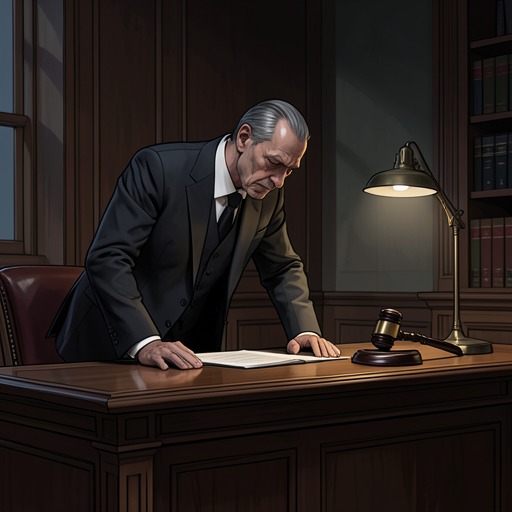
When Maryk relieves Queeg, the dispute moves from the deck to a Navy court. The prosecution treats the essential issue as whether the relief lacked proper authority and justifiable cause; it has the captain’s signed records, testimony from officers and enlisted personnel, and psychiatrists who judge Queeg sane. The defense invokes the regulations governing exceptional circumstances and argues from the danger of leaving command in the wrong hands. The novel thereby exposes a tension within naval discipline: the chain of command protects the authority needed to operate a ship, yet the regulations also contemplate action when an officer believes that command has become unsafe.
Maryk is acquitted, but the Navy’s institutional judgment does not simply ratify his decision. The later review finds that his relief of Queeg constituted improper performance of duty, criticizes his reliance on uninformed medical opinions, and says Willie sided wholeheartedly with him rather than complying reluctantly. The contrast between the courtroom verdict and the subsequent administrative censure shows that legal acquittal does not erase the service’s insistence on command authority. Maryk is detached from USS Caine soon after his acquittal and sent to command a landing craft, a reassignment that ends his naval hopes. Willie, too, faces consequences for his part in the relief.
Demobilization and the Meaning of Service
As the war approaches its end, the Navy’s administrative machinery turns from mobilization toward release. Its discharge point system provokes anger aboard USS Caine; Willie calculates that the announced schedule would keep him in service until February 1949. The system’s rules give no credit for overseas service or combat, and the ship’s officers later encounter mandatory-release requirements that allow exceptions only when national security is endangered, with each exception reported in writing to the Secretary of the Navy. The same bureaucracy that organized wartime service now determines how quickly its personnel can return to civilian life.
USS Caine is not chosen for the minesweeping operation preparing the harbor at Tokyo. Willie and Tom Keefer appeal to the MinePac office, but the operations officer judges the ship unfit to make the journey: a further breakdown during typhoon season could leave it with only twelve knots of power. The refusal is a practical consequence of the ship’s deteriorated condition, and the two officers watch the other minesweepers depart without them. The episode joins institutional judgment to material limits: willingness to serve cannot make a damaged vessel seaworthy.
At the ship’s end, Willie describes USS Caine as obsolete, damaged, and without a spectacular record, but insists that its men performed work the country needed. The ship had swept only six mines and spent much of the war escorting; those figures do not make its service meaningless. The Navy’s ordinary duties, its complex procedures, and its imperfect chain of command are all part of the same wartime institution. The novel’s central tension is that the system depends on obedience and routine, while its survival may also depend on people judging when routine has ceased to serve the mission.